
The Compass Rose
Literary Fantasy

Foreward
The Compass Rose is neither plot-forward, nor is it idle portraiture. It is like a moving painting where the point isn't the destination, but rather to exist in the moment, that ever-present now that demands you slow down—for you're already where you need to be—and admire the sights and sounds; to close yourself off from the world of hustle and grind, if only for a little while.
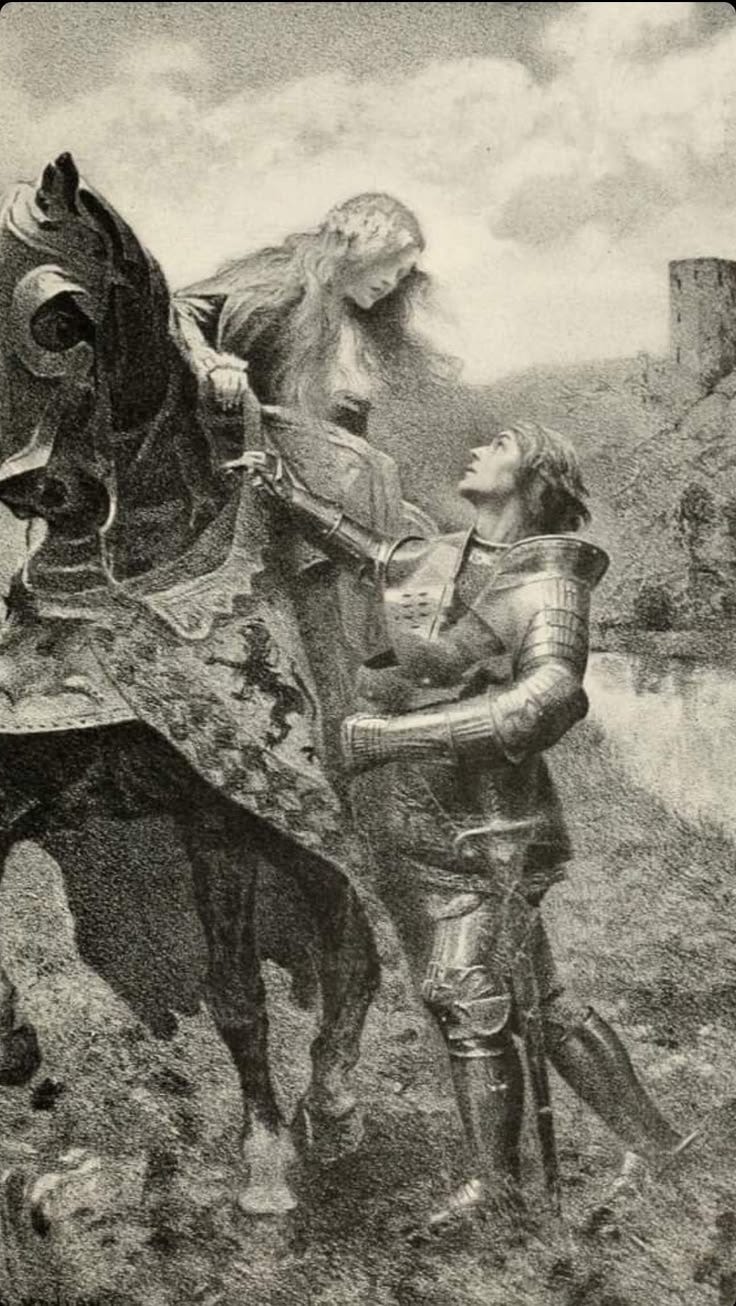
To describe my work in the simplest way possible, it is written to invoke the pre-Raphaelite aesthetic. In more complicated terms, that means it hearkens back to paintings and illustrations that emphasize romantic, chivalric, and mythic themes, which are then composed in a Renaissance or late medieval style, such as in the manner of Boticelli's Venus, among others. I further see fit that I should carry the torch rather than the ashes forward, and as such I believe our modern sensibilities have little use for the Victorian ethos of chastity and weaponized civility. Instead, the world cries out in passion, in aching, in yearning, where light at times gives way to shadow, and pastels, at times, give way to more sanguinary hues.
As such the language is necessarily elevated and necessarily dense. In the frame narrative, I employ a mixed register of Middle and Early Modern English, and arrange it similarly to Victorian-era prose. In the nested stories, characters speak the sort of English contemporary to Sir Thomas Malory, as provided in his work Le Morte d'Arthur. However, these narrative choices shouldn't be treated as points of friction, or something that you need to read over and over to understand, as the meaning of the words are far less important than the images and emotional affects they evoke. Or, to get at the very heart of the matter,
“I have no idea to this day what those two Italian ladies were singing about. Truth is, I don't want to know. Some things are best left unsaid. I'd like to think they were singing about something so beautiful, it can't be expressed in words, and makes your heart ache because of it. I tell you, those voices soared higher and farther than anybody in a gray place dares to dream. It was like some beautiful bird flapped into our drab little cage and made those walls dissolve away, and for the briefest of moments, every last man in Shawshank felt free.”
–The Shawshank Redemption
The Compass Rose
*****
The first to arrive was Niamh. Niamh, from the Emerald Isle. Niamh, who traveled east. Niamh had crossed the Irish sea, onward from a rough-hewn cliff called Moher. Yonder she passed the plain azure, that place where waves boiled away to foam, and shortly where the foam had gathered ‘round a scorchèd rock that was once a land of mists, a land abundant in orchards and youth undying and ruled over by nine witches¹.
Woe betide, she said, and carried on.
For days she passed along a breeze, days for which she failed to count, and at the end of that journey she arrived on a coast—a quiet, low-rocky shore that fed towards a hill, rolling and dappled in pink-purple heather. There she saw a ruined sentinel, Castle Tintagel. It was perched over the beach, and as she saw it she thought to herself, A place to sojourn. A place to rest my weary wind. Here be as good as any.
Niamh pondered the stone, half by which a film of algae triumped and mottled it green, and half by which was stained by dirt, by mould and whatever else nature could wrack against it by air and by sea. She hovered from above. She alighted o’er the war-ravaged walls where she heard, from an age called yore, the clamor of swords and axes and the screams of wild men. And through the draughts that howled in sea-salted halls she heard the echoes borne of fate, of two that is, who heralded the rightful prince of England by many throes and a few stolen thrusts.
How horrid, said Niamh, and she shuddered.
She knew the echo, the wraith, the once-duchess Igraine had thought the once-man before her was the duke, but he wasn’t, no, he was a brute; he was wreathed in strong magic², and he fought with fair foulness, and he walked in forceful steps, those stinging rings of spurs jingle-jangle, and he raised his visor stained by the blood of her husband’s men, and he stood to fore shoulders square, hand to pommel, offering no quarter, no excuse to tarry, but demanding she lay with her husband, in truth to say not her husband but him, Uther, the tyrant king.
Niamh could scarce endure the recollection, mournful as it was, so she departed, bounding once again on an errant gust that brought her to a wood, ancient, older than she, even. It was riddled in oak. Their branches gnarled. They spanned the canopy whole, such that only a few scattered, thin columns of light could filter through and rest upon the untreaden soil. Somewhere underneath, in divers hidden nooks and knots and hollows resided elves, delicate fae who’d otherwise die in the sun—but here they’d play on moss, and here she bid them each a happy morrow, and here they bid a happy tiding in turn, offering Niamh a toadstool by which to lay and fall away to dreams.
Now Ariel was one who flew higher, and if it weren't for a passing whirlwind, or the electric dance she sometimes found in a squall below, Ariel would rarely know of such adventures as did Niamh, the kind of which were common on terrestrial floors where roe may roam, where siege engines roll, and maids may wish on stars. She was the second to arrive, and she hailed from an island called Cyprus and thence wandered the Mare Nostrum entire. First to Damask. Alexandria. Sandy Libya and Morocco. Then Castile to Normandy to London, wholly uneventful ‘til she fared westward, nigh the duchy Cornwall, and saw a stir among the foliage. She heard a mass of jubilation below—Laughter, methinks—and knew full well it was Niamh, her sister, that lovely lass who couldn't help but make friends with whoever she passed. Ariel could hear the maiden humming in her sleep, singing perhaps to a bird which could only be seen by her, so that she thought better than to wake her dear sibling. Instead, she crept along a mist and waited.
Third came Zephyrus. Zephyrus, from the Bosphorus, the strait that cradled the crown of the east³ and its jewel the Hagia Sophia. And Zephyrus, who rode on the break of thunder, stood atop a black chariot that groaned and crackled in scars before it spewed its rains below, crying:
Boom! And let the land be soaked. Let thee drink, O Blossom, these dews engendered.
All the forest spirits, the little creatures, and Niamh and Ariel were aggrieved by his presence, and all but the sisters had scattered hence, fleeing each to their hidden burrows. Whereupon said Zephyrus, Sorrows be upon me, and dismounting he waved the tempest off, which billowed its way somewhere north, somewhere east, and passed without a quarrel.
Then came the last. The last without a name. He or she arrived saddled on a peregrine, and whether he or whether she, it could not be known which, and he or she could neither be seen but for the things in its presence that shifted to suit his or her motions.
From whence hadst thou come, asked Zephyrus to they, and they replied, No place, no when, nonesuch. And frustrated, Zephyrus stirred up the dirt and asked, And after that, to which the spirit replied, Northwise, friend, from a frigid plain, then following south ‘til I came upon a land of wine, a land of vineyards, where sunflowers bowed to the Pyrenees crown against the morrow.
Oh, Gascony! cried Ariel, and the northern wind said Yea.
Ought you tell the tale for us, inquired Niamh, but the wind didn't answer. The peregrine cocked his head. Minutes passed in silence ‘til the wind at last said, I tire from my journey.
Nodding, Zephyrus didn’t press the matter further. He turned to Niamh and requested she recount her story, but Niamh said Fie, the dagger still woundeth me. Sweet misericorde.
Wherefore, he asked, then apologized for his rudeness.
Nay, think ye naught of it. ‘Tis good you asked no'theless. ‘Twas ‘cause I swept too close to the sea, o lord of storms. A merrow-maid—she took me in her siren song. Thither sink me down, I had fallen in love. Now my heart doth ache, so I needs be silent on it, if but for an hour hence.
Very well. Ariel?
Gascony, she said, My favored clime, my favored chime to wit. Ho, great cheer. Let me relay the time I spent in her spring and summer light.
And at that, all the winds had perked. There were leaves and petals scattered about, and the peregrine soon fled away as it wouldn’t have ado with such noise and nonsense. Soon the airs died down and Ariel told her tale:
La Belle Dame Sans Merci
*****
The spring hath come, yet hither stay,
In ice and earth I lay;
And raise me from this frozen chest,
Arrest, sweet smile, at thy behest;
One touch to thaw this heart of rime,
Her womb entombed in winter’s time.
‘Twas each Sunday on the morrowtide, afore the dews on the heavenly skies did spread and reprise to earth their sweet-liquor'd rains, when April that faerie nymph so nigh had called and offered all what hearts desire. Thither a bed of forget-me-nots she kneeled. She crafted her a garland. She gathered dew to hand and fed a yellow-breasted bird. The bird rejoiced and sung her song.
The first who hearkened was a squire, foul dressed in harness, and with a dullen bit for wit and for hand. When the maid took account of him, she laughed and laughed and laughed, and she quoth, Who durst dishonour my presence, besene as thou art? Begone from me, knave!
And I hear tell, by her speech, the squire was sore aggrieved and injured in such a manner as can or will a comely maid inflict, so that he fled from that glade and took to the saddle, and found he refuge in battle with the English, at the field hight Formigny⁴, whence beneath his axe many men of arms had chanced and fell to dirt, anon giving up the ghost. When the field was clear of shot and smoke, his lord Sir Richemont praised him by the point, shoulder-to-shoulder and said Rise, sir knight.
Erst the while, on that very first Sunday, a lordinge arrayed in well-gilt locks arrived when the maid had beckoned. He found her on a rock in her hidden glade, her head without wimple, fiery as it was, and her form was draped in verdant velvet, and by her lips played a flute. She reached out her hand as the count took hold of it and kissed it. Then the faerie maid looked at him and smiled and said, Speak thy name and name thy honours.
The count obliged and answered, Fair maiden, I am count of this realm yclept Poitou, and I have treated my subjects all with kindness and courtesy.
Upon hearing this, the maid was filled with great cheer so that she said, Very well. If thou dost love me, then thou must stay a seve-night, and therewithal, take me as thy mistress ‘til the end of Sunday next.
Whereupon the count answered Nay, I cannot. And the maid asked Wherefore? And the count replied Woe, my wife is a good wife, hende and passing wise in beauty and gentleness. A stain upon my honour, should I betake a mistress.
But there the maid would rather not hear it and undressed in that stead, when anon the count amended his speech and said, I shall entreat your request, good maiden.
When the seve-night passed, the count and the maid bade their farewells, and of the moments which followed, another fellow stood before her. Quoth he, I have answered thy call. And the maiden looked upon the man, perfumed as he was in strong scents and preened all over, so with some disdain she said, Thou art fine in feature and well-arrayed, but a man needeth be a man and a woman a woman. What say thee? Speak thy name and name thy honours.
The man bowed and answered, My lady. My name is Alonso Ariosto and I have traveled far, my quill and ink alway at the ready, for I am a poet of no small renown in Ferrara.
The maiden sat high. How wonderful, said she, and then she asked the man recite a verse. Again he bowed. He cleared of his throat and answered thus:
Perforce we shall tonight the more entwined
Afore the broken dawn, the which shall pass
On each in kind, for time and time what’s ours
To keep and hold. Let sleep upon the grass,
In dreams of nectar, rains from yesternight
On bodies twain, where clouds above may dash,
And–
That will do, quoth the maid. She undressed, and for a seve-night master Ariosto was kept and released the following sabbath, fullmuch in a stupor.
Hark, on that the third Sunday a lady rode thurth, saddled on her palfrey clip-clop astride a man of arms whence alit before the nymph. She was dressed in a ghostly gown, and her hennin sprout but twain of horns as the maid did frown.
Oh dearly me, spake the maid, That I wish to be as coifed as you, fain for all to see and admire and say, O Marian, fairest of all the fae, give me your hand, so that I may dutifully oblige your every wish.
Such the wise, the hennin she did so covet and the which she essayed, but the lady raised a palm for to bid the maid silent. Then her squire drew his sword and the lady said, Thou harlot! Temptress of men. Lusting as the depths are hot. To lay with my husband is a trespass I shan't forgive. Now fallest thou to knee. Begst thee forgiveness and thy end may come but swift.
The maid did tarry at whiles, when at last she asked of the other, Of whom dost ye speak, my lady? And the lady answered, My husband, count of this realm. To that, the maid bellowed, saying, Oh, but the man is weak as all who sleep on cushions! Certes he scarcely held against my pleasure. Can you blame a foolish damsel, whose lot is to be beautiful and foolish, but naught else?
And verily by that insult, of both to spouse and wit, the lady was wonderly wroth. Slay her, commanded she, but her squire shook his head nay and sheathed his sword, falling soon to the maiden's comely countenance.
Needs me not say the lady parted with nary a drop of blood to her ire, but in its stead beat a heart consumed in fire, for her head was undressed as she had also fallen to the faerie lyre. And smitten flush as she was, she sorely wished the nymph would call on her posthaste, but never again her husband, whose honour was well-shorn like a bleating sheep, according to her.
Thence she rode away, and for the next seven days the maid and countess both longed for the other. A letter was writ and stowed in the lady's chamber, away from prying eyes, but espied me the verse therein and it said,
O fortunate grace,
Thou left this space
And left me a hole,
The nighttide sky where stars may shine.
Come the last Sunday of April, her rains did dry, and the ground was parched, and the clouds did part as blue the sky issued thurth. On a lit column, lonely and shining bright, there rode the blares of a cherub's trumpet, herald of May, and below a daffodil raised from her earthen tomb, and the faerie pool did glimmer in that fair virtue. The man who was once a squire, returnèd he a knight from that field arrayed foul where English lay, and saddled on a destrier so rightly dark he prayed for that maiden to grant him due audience. When he stood at her glade, the maid was sitting on a mossy log with cheer on her lips, for she wore the lady's hennin and it fit so well. As such she played the lady's part, and she frowned and raised her nose and said, Thou again? How conceiveth thee worthy to kiss my hand?
And he answered, I smote a score of men—men who were kin to beasts—those who stepped in steel and trespassed on this kingdom. And henceforth, my lord had forthright laid his sword upon my shoulder and belted me noble.
Upon hearing, the maiden glanced askance, flicked her hand and spake, Nay, thou art no gentleman. One who would give slaughter to beasts is but the son of a bitch and butcher. But hold, said she, If thou art belted at arms, then must be thou so nobly proven. Wherefore, a noble deed I would ask.
Anything for you, answered he, and she smiled and said Verily good.
For that, the deed was thus described: that he must annoint his lance in the faerie pool and raise it pointwise ‘gainst the heart of a red dragon.
For a dragon is no beast. It is the evil that men do.
Then thou wouldst bring the splintered heart to me, she said. Heart of woe, heart of darkness thine own. Lower it into the wat'ry looking glass, the which will turn red and show who is who, who is noble, and who will have their desires made sooth.
The dragon she claimed gave her much ado, for when the fiend did soar above, the woods beneath were soon a-rendered ash. But prithee, she bade, Slay it right and slay it true, then truly for thee I'll splay. This I swear.
Forthwith the knight did bow—On my honour, he answered—and fetched he a lance for to dip in the pool, imbuing it in faerie enchantments ere he rode to the dragon's domain. Thither on a broad field that I ween could roll to eternity, he espied that creature, red as blood and feasting on a lamb. It turned as the knight approached. The knight drew down his visor. He lowered his lance and the dragon held square at the withers.
Then hyah! cried he.
His charger sprang to fore. Hooves gathered thunder, his harness clattered, and the dragon did yawn to issue a burning stream, whereupon the knight pulled hard at the reins and voided that space, tourneying fast to drive a point betwixt the rib as the ashen haft groaned and bent until—crack!—when the lance was burst to splinters, and the dragon tumbled rearward, shrieking. Oh how the whole inferno did shriek as all the vene and birds from yon the vert dispersed to distant londes!
But lo, his foe was not dead. Nay friends, it was not, for it rose in a great fury it did, and when the knight passed again and pulled his axe to hew from high to hell, it whipped its tail, fluke to helm whence struck and tolled his bell. In sequel he was unhorsed and the dragon fled to the skies.
O sorrow be upon him. That poor fellow. When he returned to the maid, she sith had sprouted her gossamer wings, and she was flush in cheek, and she was also bigge at the haunch and bosom, where golden hair did fall, yet small she was in all the fair places. He trembled at the sight, averting his eye, and recounting of his trial and folly, he showed his shivered lance, asking wherefore, wherefore did your faerie magic fail me?
But to that the maid would only sneer. She refused to answer.
Then the knight fell to knee and begged forgiveness—For another cast of the die, quoth he—but she would do naught but look away and dismiss him as he were that a serf.
Thus dismayed and dishonoured, he lowered his head and silent, he departed. For ten-year more, he would not return to that glade.
In the meanwhile, he returned to his father's lands and greeted with much joy. The knight had not a wit wherefore, but the villeins delivered good tidings. Word had spread throughout by witness of his deed of arms—that he had struck a great injury upon the red dragon of Tours, who was found bleeding in the wood until dead. Thereafter, its body was cut to pieces. The apothecary took its scales and ground them to fine powders, and it was hence reported how every maid who ingested it was shortly able to conceive; for each, a son and a daughter. And with as much good fortune, no mother had perished whilst giving birth. Like the wise, the alchemist took the dragon’s claws and horns, and mixed them with quicksilver for to make gold. Its teeth were taken for amulets to ward against fire. Its eyes against curses. Its flukes delivered to the knight himself, for to wear on his helm at the field and tourney. And at last, its pierced heart was sent to the count, who forthwith sent for the knight to thank him and furnish him with gifts of arms and armour.
On June the first, the count held a feast to celebrate the vanquishing of the dragon. The knight was the honoured guest, and so too was he, that poet Ariosto present. He had a daughter hight Lucrezia, comeliest Lucrezia who accompanied him, and through the day and well into the eventide, she and the knight traded glances.
(Continued…)
¹ As per that fellow I chanced on Watling Street, one O’ Mallory, madman, mystic, mendicant, who quoth, A star had fallen from the firmament. How did it fall, inquired I. And spake he, By dragons three, three carnyxes. One in Wales, red; one who resided on a jagged rock far northwise from Albion, of earthen hue; and one a westerly way from yonder Limerick, verdant, who hourly vexed the puffins on Skellig Michael, he did. Oh they bellowed at the sky, and they shook the heavens ‘til the star was loosed; ‘til it rendered old Avalon to waste, broke it up like a boiling stew of rock, foam, wood and stone, of perished fish and perished toads. And forthwith, the great stoor worm, ‘tis said, had risen ‘long the surface and devoured what aught remained.
² Merlin, who in all good counsel wot best to tug the nearest thread and make profit on ‘t, but by him this realm made doole as nary else had come unspooled. Nay, none for him to craft his auguries; none he wished it so. And so let it be known, He who weaveth dreams from bad strings, awaken nightmares, for he weened no other way but that to yield to Uther’s whim, to Uther’s lusts, and change him thus in wise the duke, his selfsame likeness. Perchance upon slaying the lord Gorlois in honourable combat, the king might later court the mournful widow? But alas! There be no story there, methinks.
³ Istanbul (not Constantinople).
⁴ Knowst thou, there be no hell what burneth hotter than that which man will burn for himself. Had an English fellow the good fortune to quit that field, he numbered among the few men at arms under the banner of one Sir Matthew Gough, and Gough beneath the greater banner of Sir Thomas Kyriell, who was surrounded, fell upon and ransomed. Much the rest were cut by the throat and cast in a godless pit, in God-knoweth-where, unconsecrated and unbeknown to wives and mothers alike.
The footnote on Istanbul is where I knew this was serious. 😁🙏
This would sound fantastic as an audiobook. Have you ever considered reading these stories out loud? Like Dickens.